

When I am Among the Trees
When I am Among the Trees…
What are you like among the trees?
Do we even notice them? Do we listen into them?
Our Ian Lobb, friend of Fairfield, lad of the congregation as a child: who returned ‘home’ here in his retirement; and found LIFE in all it’s fullness; he studied trees. As an artist in the Photographic world, he took daily sequential pictures of the Gum Tree in our Garden, all through the years of lockdown. He became acquainted with the tree in ways we take for granted or don’t even see. He knew when, in winter, the roots systems don’t see any sun, due to the shadow of the appartments opposite. He knew the colour of the bark in and out of season. He watched it’s limbs: the way the sunlight dances on the eucalyptus leaves. Silver and sparkles.
When I am among the trees…
…I would almost say that they save me, and daily. (Mary Oliver)
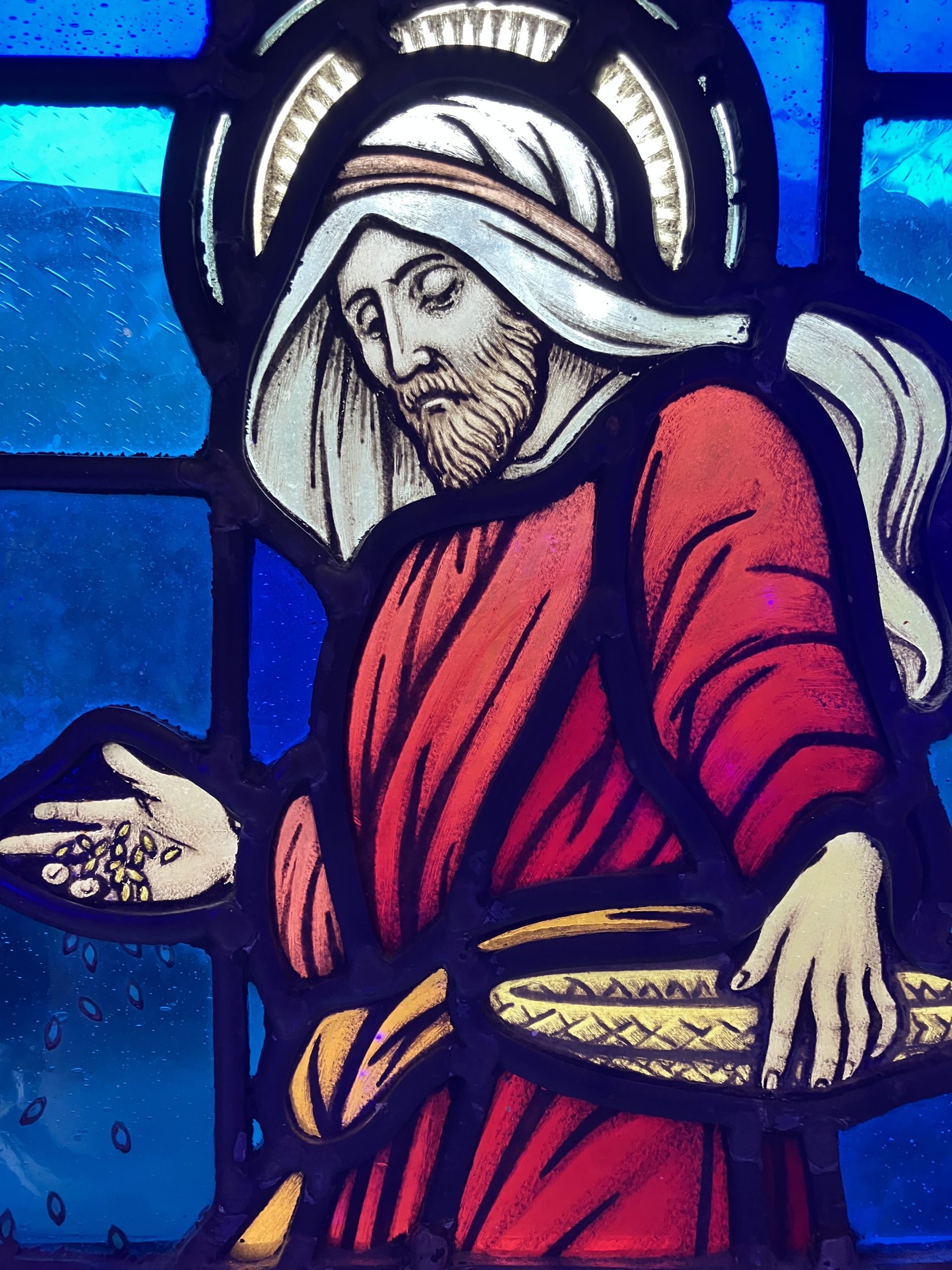
We encountered ‘Christ like soil’ two weeks ago in the Parable of the Sower: the God who extravagantly casts abundant seeds upon all soils and grounds, regardless of the soil type. And poet Wendel Berry reminded us of the christ-likeness of the soil:
“The most exemplary nature is that of the topsoil. It is very Christ-like in its passivity and beneficence, and in the penetrating energy that issues out of its peaceableness. It increases by experience, by the passage of seasons over it, growth rising out of it and returning to it, not by ambition or aggressiveness. It is enriched by all things that die and enter into it. It keeps the past, not as history or as memory, but as richness, new possibility. Its fertility is always building up out of death into promise. Death is the bridge or the tunnel by which its past enters its future.”
Although the parable is about the abundance of the sower’s love: to imagine Christ in the soil that is you and I, is worth the imagining…
This collection of parables; so important that an earlier congregation; the ones who were responsible for rebuilding the church here in the 1950s after the terrible fire that burned the original timber church to the ground: they though these parables were so important that they commissioned a Stained glass window, so that further congregations might be inspired by it…; but maybe, we have ‘heard it all before’; the scandal of parables just slips off us.
David McCracken, in his book, The Scandal of the Gospels says that this collection of parables fall into both parable and ‘skandalon’: they are the occasion for either taking offence or responding with faith.
He says “Parables do not ‘contain’ knowledge; they cannot be understood as we understand a moral tale, and argument, or a statement. Parables precipitate internal action, forcing the hearer or reader to a crisis or collision that requires movement, which in New Testament terms is an either/or: either stumbling or changing-and-becoming, either enacting a lie that we desire or being transformed.”
And I’d say here at Fairfield Uniting, we approach parables with the kind of open heart that seeks Changing & Becoming and being transformed…so lets have some fun: So
When I am among Parables…
Walking amongst these tall stories…. of everyday things… that might help us be disturbed…
Last week’s story of the Parable of the Wheat and the Weeds tells of “an enemy” who sows weeds into a farmer’s field under the cover of night; now, immediately after that story Matthew follows with THIS parable of a someone who intentionally sows a weed — mustard — into his own field! Can we read these two parables together without being scandalized? (Because only Matthew puts these stories together in this order and way…)
Think about this story again: the wonderful Mustard seed we think… so small, and so amazing; BUT from the perspective and ears of ancient Jewish people… this is an outrageous picture: mustard is a weed. Who, in their right mind would sow a weed into their garden? It is not kosher to plant mustard with anything else; if you grow mustard intentionally, you grow it separated from other crop & Matthew has the character sow it “in his field.”
And remember, each story is like the Kingdom of heaven…
The Kingdom is like the sower who scatters seed abundantly
The Kingdom is like the wheat that is sown and the weeds that surprisingly pop up and are only discovered once their roots systems are entangled…
The Kingdom is like a tiny weed seed: that grows and finds a place of community for all…
If the Parable of the Wheat and Weeds can be read as a subversion from our usual way to respond to evil. That we think an enemy to God has sown evil into this world and that we are commissioned to root it out: Jesus says no. We no experts in knowing good from evil.
Then the Parable of the Mustard Seed immediately ups the ante by portraying a farmer who sows a weed into his field on purpose.
Paul Neuchterlein invites us to consider what God has done in Jesus Christ. ‘Jesus is sown into this world as one who will willingly let himself be treated as a weed in order that we might finally see the deadliness of our thinking we know good from evil’… and the One who creates habitats for all to find new life.
When you are in the position of explaining your faith: how these stories of following Jesus resonate in your life: do you draw upon these parables? When those in your life make a comment about God; the injustice of life; the presence of wrong in the world… do these parables come to mind to help the conversations?
How do these parables enrich your sense of possibility about God in your life?
Like imagining your life sprinkled with seeds of abundant love:
Like imagining that we need no worry too much about the weeds…
Like believing that your little mustard seed is enough… and might do amazing things…