

seeds: Wheat and Weeds
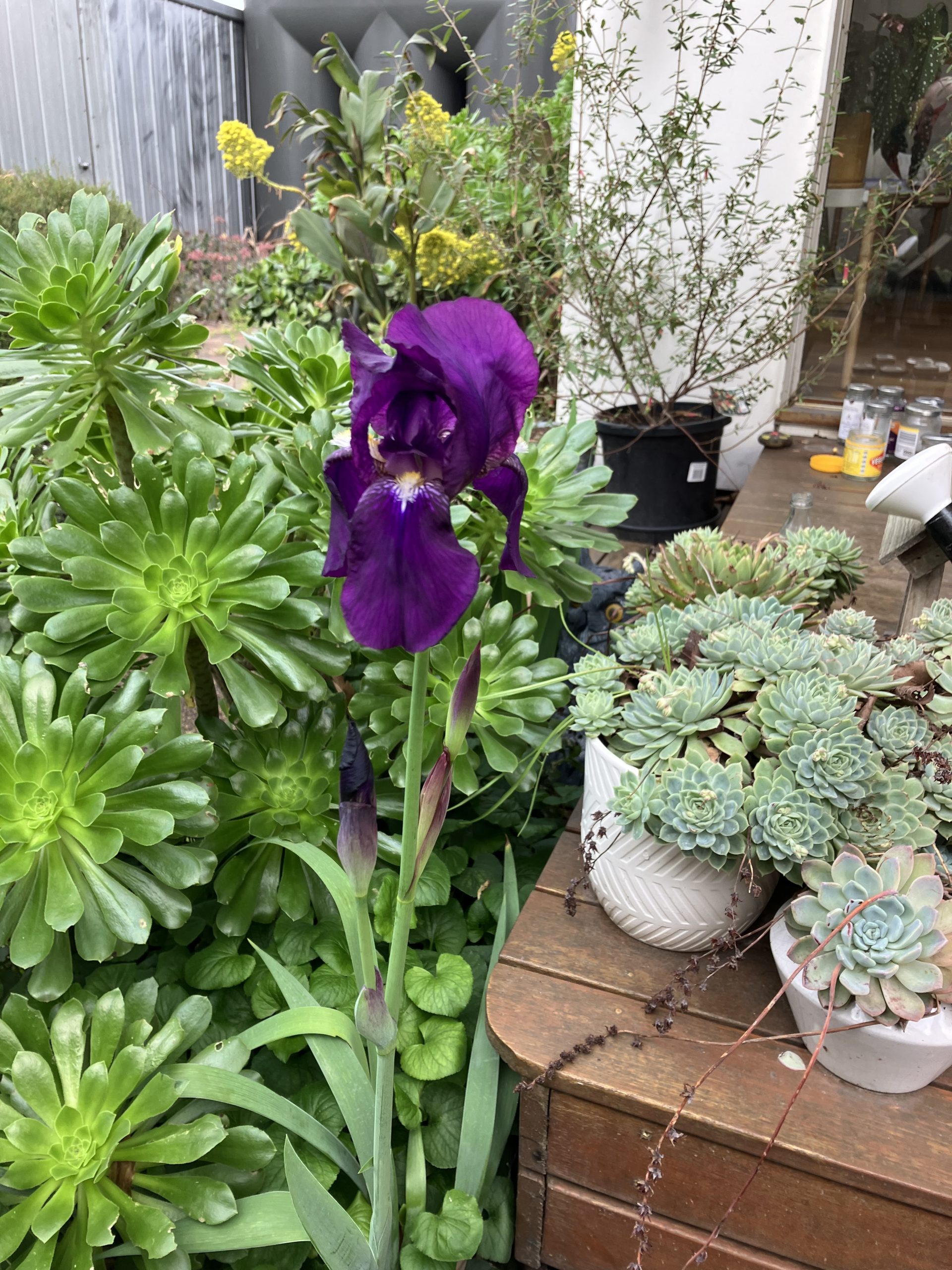
I know the beauty, wonder and abundance of gardening: and truly can appreciate it. And I know the significance of this plants. A Iris shot up in my garden: so quickly last week. I took a photo of it and sent it to a friend. I know that it was her grandmothers favourite.
I’m both deeply in awe and appreciative of what I learn in conversation from Helen and Graham and Brian on aspects of gardening here in our church garden. Im not born with a green thumb: but I’m learning.
I have had a friend in Hospital. Do you remember when Hospitals also had gardens? Hospitals used to have intentional gardens: because we know that gardens heal. Gardens bring healing. From my friends room at the Hospital, she has a frosted window and 10cm of clear glass where you can see a pointy roof and a bit of sky…
Each week here in Church, there is what I call ‘the ministry of flowers’… and when we don’t have flowers or greenery, something is missing…
Seeds are at the heart of these parables: last week (the sower), this week (wheat and weeds) and next week – the mustard seed. The magic of seeds, their little built in ‘time clock’: the magic of it swelling with moisture and breaking open to allow the tendril to explore through the darkness of the dirt towards the light: is a LITERAL metaphor.
So, let’s deepen the story and then have a think about it’s application…
Straight into the text we find the word, ζιζάνια, and that is defined by ‘thebible.org‘ as “a kind of darnel, bastard wheat, resembling wheat except that the grains are black.” The key, for this text, may be that this kind of grain resembles wheat. That may explain why it was not spotted by the workers in the story, until the root systems had time to intertwine and the grain was beginning to appear.
The term ‘weed’ in this story is a judgement call in the context of this story: and this overlay of the deceptive nature of the weed that looks like and behaves like wheat, just deepens the narrative… and perhaps the story’s applications to we, the listeners.
It might also be interesting to note, from a language/translation end: the word to describe to ‘pluck up’ the plants refers to pluck up BY THE ROOTS. So, the complex in this story is at ROOT level: it is at the level of the roots where the wheat and weeds are intertwined… Iike our lives eh? Interconnected in unexpected ways.
In our current political climate: locally and worldwide: or poolside at five-star luxury resorts in Sicily; how might this parable help us to respond?
If you are anything like me, there might be part of your character that needs things done: right now, this time last month. And yet, this story offers an alternative reality: and offers an openness to decompress entanglement. My on-line theological Buddy, D. Mark Davis; who writes the wonderful blogspot called “left behind and living it” offers an interesting consideration:
Helmut Richard Niebuhr: who was one of the most important Christian Ethicists of the 20th Century, argued in 1933 and called the church and State to ‘do nothing’, when there was political will for action against Japan for invading Manchuria. Helmut Richard Niebuhr raised this parable in his article named, “The Grace of Doing Nothing.” For Helmut, ‘doing nothing’ was not the same as ‘not doing anything.’ It was, rather, a deliberate action of patient faith.
There are times when doing nothing is ethically necessary, because the unintended consequences of doing something or anything, in the face of evil, might often end up destroying the very thing we are trying to protect.
Now, if you like jokes, like I do, then here’s a bit of historical humour: Helmut’s brother Reinhold, (who was also a Christian minister and celebrated Christian Ethicist) unfortunately won the argument in an essay competing essay entitled “Must We Do Nothing?” (Proving once again, that families can hold opposing theological ideas.)
That question, “Must we do nothing?” is always the reply against the parable of the wheat and weeds. Yet, the in the parable, the owner’s wisdom proves remarkable time after time. In trying to rid the world of global terror, not only have countless innocent lives been lost or shattered, but every act of overreach against terrorism seems to producing more terrorism.
It speaks into the news this morning with the gulf nations, eh? Today’s parable offers a possible pathway that I guarantee you has NEVER been considered in the current political powerhouses. In that sphere of political decision-making, ‘the grace of doing nothing’ is a losing proposition.
Now I know I’m out of my league: and I’m not here to save think that I could help solve that issue; but as people of Christian Faith, we are asked to contribute to our community: into our public discourse; and to be helpful in the things that are important.
Theologian Mark Davis agrees: he says, “Certainly one could argue that the Christian Church has never taken [this parable] it as an article of faith. Typically when the light-sabers rattle, often the church rallies with them. This parable however, with its unlikely phrase, “An enemy has done this,” invites even the angriest reactionary to consider the complexity of wheat and weeds, good and bad, us and them.”
We are in it together. The days of dismissing the scary-ness of the extreme right as ‘nut jobs’, actually stokes the fire of further anger, alienation, dis-empowerment and fosters normalisation of such positions. Dismissing or disregarding the arguments, no matter how flimsy, makes the current situations worse.
The reactions needed from us, as followers of the Jesus way, need to be as wise as this parable. And to recall that we are light and yeast and salt in every conversation. And the call to live the Grace of Christ starts here with you and me. With gestures of good will: expressions of love: demonstrations of how we can be for one another. And conversations that open up issues from their compressed simplicity.
Gestures of good will and expressions of love might even start with simple acts of taking a photo of an Iris, because you know it’s significance: or visiting a friend in hospital who has no view out the window. And in so doing, we connect to God in our world… and God in our lives.