

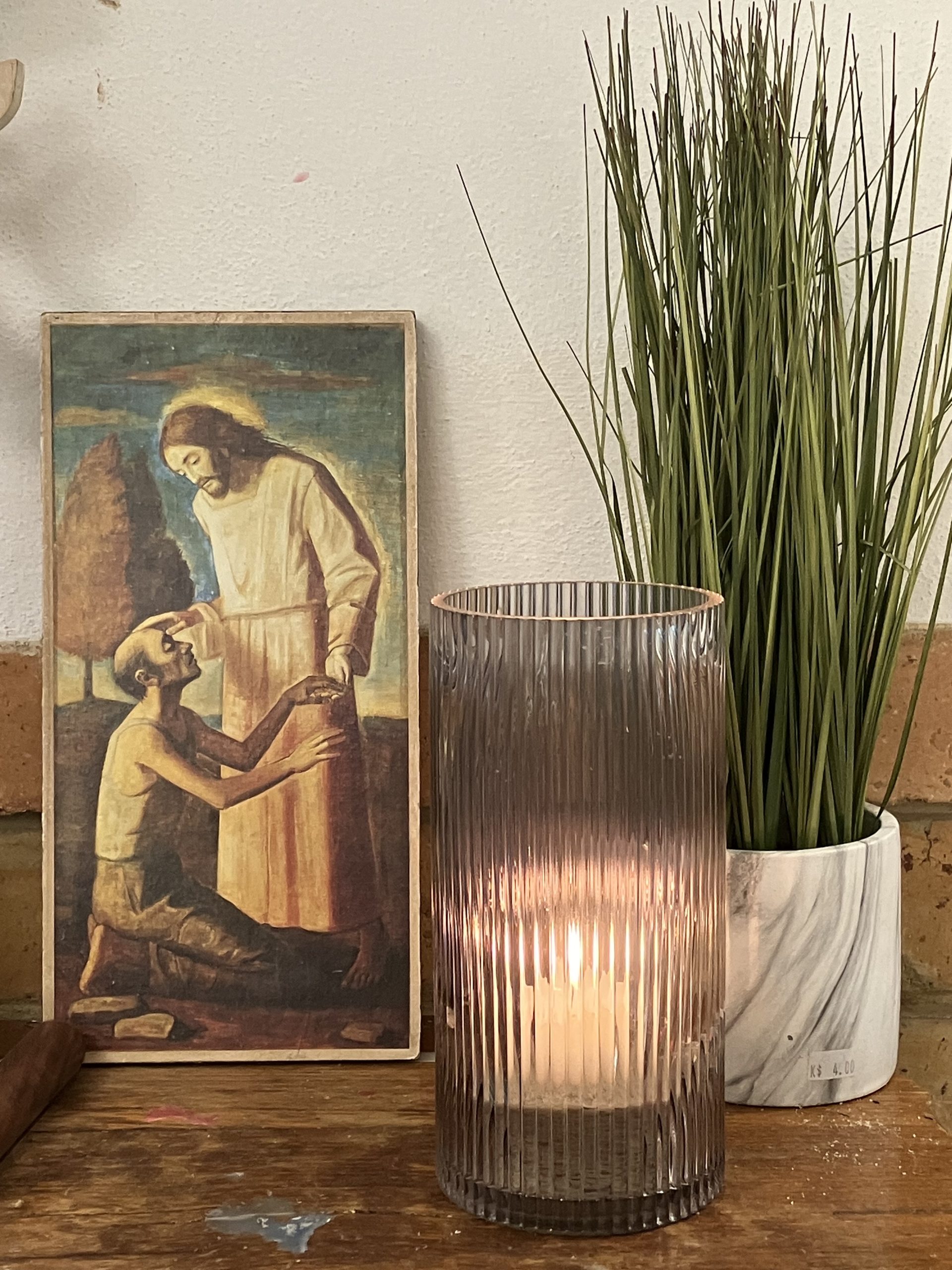
Place has meaning
My best friend took his fiancé into a paddock of Sun Flowers, where he popped the question. “Will you Marry me?”
Have you done something similar?
Is there a special place, you chose intentionally for some specific reason?
Places have significance.
Tourism is often based around special places.
- The bridge where Miranda and Steve found reconciliation after a breach in their marriage vows…
- “Out on the wiley, windy moors, We’d roll and fall in green”.
- “I am 16 going on 17…”
Where have you gone where something special happened?
Some places are only significant to us. When have you taken yourself to a cafe or garden of significance? Not necessarily to re-invent the memory, but maybe to honour it? Or pay attention to that moment and how it sits in your heart? I recently was in Altona, where my paternal grandparents lived after they emigrated… I can see their home as sharp as a tack in my mind: of all the houses in Maidstone Street, their was the only property that was gone: levelled; vacant land. Its absence had an affect on me that I’ve yet to put into words.
When we read the Bible, so many centuries later, we miss the details the writer is telling us. Last week our Bible story took us to the non-Jewish regions of Sidon and Tyre (present day Lebanon) and that story’s location had meaning and significance for the story and it’s meaning for us today: so, today we have journeyed back to Caesarea Philippi.
Anyone been there? Thirty-five miles north of the Sea of Galilee and the religious city of around Galilee, Caesarea Philippi is a city of significant political importance. Caesarea Philippi was the regional capital of the Roman Empire, located in a lush area near the foot of Mount Hermon. It was a city with rich cultural and Spiritual significance. It was was a city dominated by immoral activities and pagan worship. It was the religious center for worship of the Greek god, Pan and before being conquered by the Romans, the Greeks named the city Panias in Pan’s honour.
And even after being conquered, the locals still built shines and temples to the god Pan. In the cliff faces, and niches carved out of the cliffs, bore statues of Greek and later, Roman gods. These caves at Caesarea Philippi created a ‘Gate to the Underworld’. Sometimes called the Gates of Hell! And it was believed that fertility gods lived in these caves during the winter. This was a city of red lights … dehumanising behaviours… and devout Jews would have avoided any contact with the despicable acts committed there: and the people involved with those acts.
There was no reason for Jesus to take his disciples this far north. Or was there?
What happens when we visit a place and actually show up in it? Does the significance of a place and what happens there help the meaning become more real: as if to act out an embodied parable.
North American Theologian, Brian McLaren writes (in his book “We Make the Road by Walking It”),
‘Imagine what it would be like enter Caesar-ville with Jesus and his team. Today, we might imagine a Jewish leader bringing his followers to Auschwitz, a Japanese leader to Hiroshima, a Native American leader to Wounded Knee, or a Palestinian leader to the wall of separation. There, in the shadow of the cliff face with its idols set into their finely carved niches, in the presence of all these terrible associations, Jesus asks his disciples a carefully crafted question: “Who do people say the Son of Man is?”
You and I have heard sermons explaining Peter’s exclamation and profession; the imagery of Peter’s name – the rock; the meaning of the keys, of the promises binding on earth and in the heavens. And some of us are aware of earlier Protestant and Roman Catholic theologies of both… For this reflection however, I’m not so interested in unpacking these matters … mainly because those arguments, important that they are, lead us away from the challenge before us in our communal and personal lives.
What is it to proclaim ourselves as followers of Jesus? And why do we shy away form it?
I mean, why do we conceal this part of our very essence from the people who are the most important in our lives? Of whom with we share life?
Peter evokes the term Christ (the anointed one), saying, “You are the liberator promised by God long ago, the one for whom we have long waited. You are King Jesus, who will liberate us from King Caesar.” And Peter will learn in the space of moments that he is right and wrong at the same time…
Brain McLaren captures the drama of the reversal between Peter’s confession and his being rebuked, concluding: “Peter knows with unquestioned certainty that God will send a Messiah to lead an armed uprising to defeat and expel the occupying Roman regime and all who collaborate with it. But NO, Jesus says. That way of thinking is human, Satanic, the opposite of God’s plan. Since the beginning, Jesus has taught that the nonviolent will inherit the Earth. Violence cannot defeat violence. Hate cannot defeat hate. Fear cannot defeat fear. Domination cannot defeat domination. God’s way is different.”
We know that. It’s the heart of the Gospel: it is its profound message to every society, in every time: God’s victory will be found through defeat, glory through shame, strength through weakness, leadership through servanthood, and life through death. Peter has lived his whole adult life with a constructed mental architecture in which is threatened by Jesus’ paradoxical message. It’s not the kind of change of perspective or expectation that happens quickly or easily. (Ibid., pp. 118-19)
Catholic theologian, James Alison notes the geography of this story informing its meaning… With a huge rock-cliff [behind them] and [the] “Gates of Hades” background, Jesus declares Peter as the rock to which that pagan world cannot withstand. [Jesus] He is going to undo nothing less than the pagan sacred.
So in our time and space: in a week when similar horrendous behaviours that have some to light in the AFL world: in the back drop of all kinds of worlds we don’t know that much about, how do you speak of Jesus? Who do you say Jesus is? How does this One we follow, inform our ‘showing up’ in the world?
So this week, I set you some homework: and encourage you to think, and work on a couple of simple questions: that might help you frame up a bit, and clarify your own proclamation: who Jesus is, and what this church practice is for us all?
We all know you can miss weekly worship and not even notice it’s absence until it’s too late: …because Christian practice is gentle, and cumulative, and curious, and works in us in little ways beneath the consciousness… When you come to a service… (and I’m not thinking about the BIG events), but normal weekly services… What does a service enable you to pay attention to? How does it encourage you to think about God, Jesus Spirit? What difference does that make, if any in your living?
(now, if I’m gonna set homework, maybe I should have a go myself to try and explore those questions as an example: I find Sunday is an hour for me to catch up with myself, my sense of Spirit, to be Still, to wonder, to…
- An hour to get out of my head
- An hour to sing beyond myself
- A time to just be with people who also believe in love and the power of love
- A time to attend to that part of me that needs attention…
Who knows what your reason is… but to find a phrase of two, and explore it… will help you. Will help all of us. My answers will be enriched by yours.
And, if your answer is “I’m here, barely” or “I’m here and I have no idea…” or “I don’t know what helps… but I’m here anyway…”; then your answer enlightens mine too… because following Jesus is something we also do together. Sometime we find ourselves in places we’ve never navigated before: where we are asked to try again, or try make sense of what our faith means or is teaching us. And then articulate it.
Notice this also, in the bible reading: Jesus continues to teach the disciples in this story: and notice this, he doesn’t rush them to find their reasons or answers. We only hear Peter’s answer… what did the others think? And Jesus continues to lead them on: and He continues to lead us all… everyday. Amen.