

Day of Mourning 2026
Art by Zoe Korbie: is a Guwa Koa, Kuku Yalanji woman with historical ties to the Wakka Wakka peoples of Cherbourg community.
Today in the life of the Uniting Church we honour a commitment we made to the Uniting and Islander Christian Congress back in 1994. Each year, on the Sunday before 26 January, our Church gathers in truth-telling, lament, and hope as we mark the Day of Mourning.
The President of the Uniting Church National Assembly, Rev. Charissa Suli says, “This is not simply an observance—it is a spiritual discipline and a covenant commitment. In 2015, the Assembly accepted the request of the Uniting Aboriginal and Islander Christian Congress (UAICC) that our whole Church pause to remember the ongoing impacts of invasion, dispossession, and injustice on First Peoples. Through this request, Congress invited the Church to walk more faithfully in the promises we made in 1994 when we entered into Covenant.”
Our service this morning is taken directly from the resource that has been provided and shaped by the leadership, spirituality, and wisdom of UAICC. We receive this service with deep gratitude.
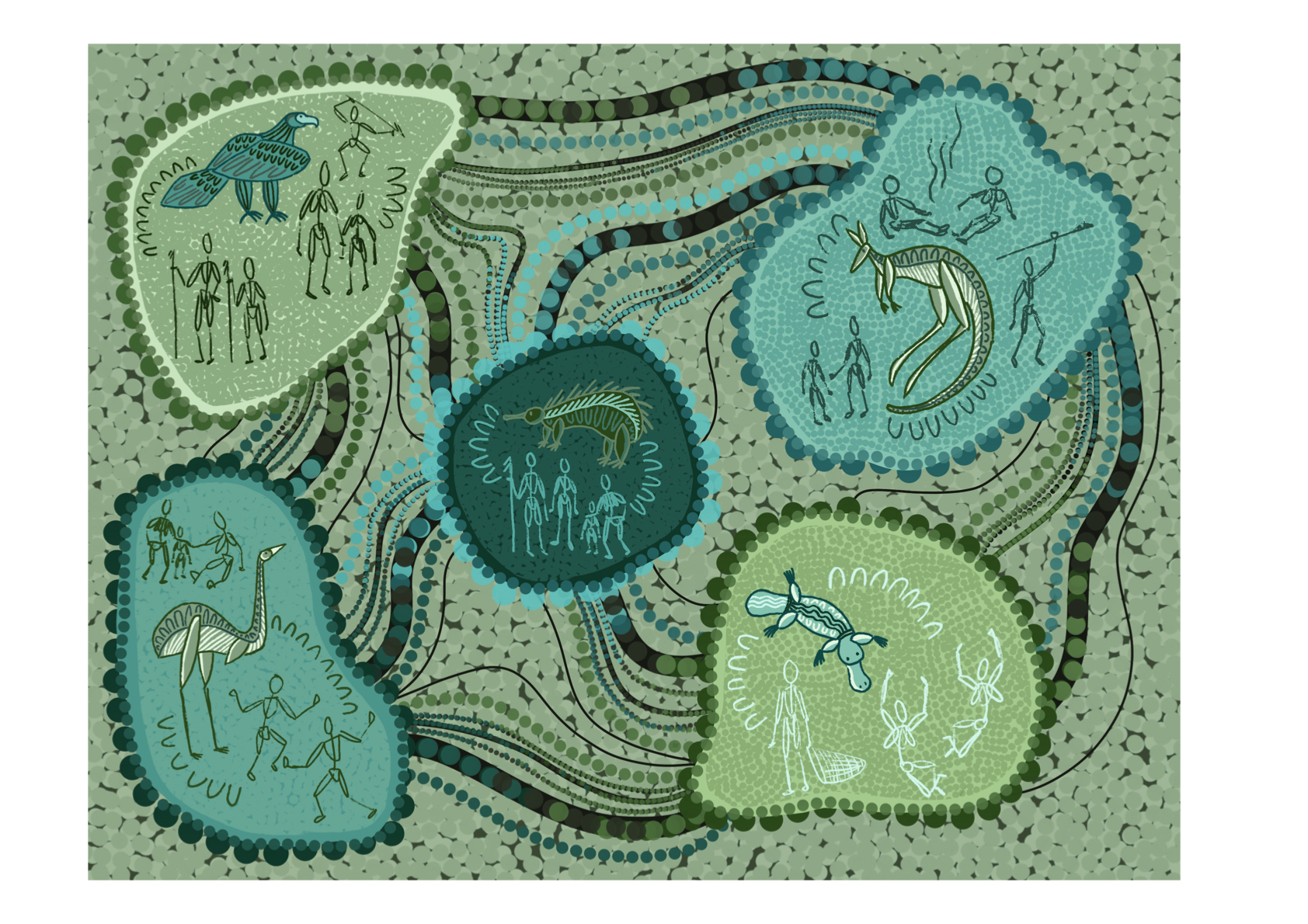
The extract from the service below is the description of the Art by Artist Zoe Korbe. Zoe is a Guwa Koa, Kuku Yalanji woman with historical ties to the Wakka Wakka peoples of Cherbourg community. She is a Youth leader in the Uniting Aboriginal and Islander Christian Congress. Use her words and the image of the Artwork as a prayerful meditation.
Artwork Story
“The people who walked in darkness have seen a great light… You have multiplied the nation; you have increased its joy.” Isaiah 9: 1-3
For countless generations, Aboriginal and Torres Strait Islander peoples lived according to cultural and spiritual laws grounded in unity, accountability, and deep interdependence with one another and with Country. The impacts of colonisation have left deep spiritual, cultural, and relational wounds; that continue to shape the land and its peoples today. These wounds are acknowledged in this artwork through the black pathway lines, which represent shared sorrow, loss, and lament across the meeting places, and communities.
At the centre of the artwork is a gathering place holding family and community together beneath an ancestral presence. This central space reflects the reality that sorrow is not carried alone but held collectively. From this place, Songlines flow outward, connecting to other community gatherings, where people dance, teach, hunt, and celebrate their culture.
Living connections remind us that healing does not happen in isolation, but moves through relationships, stories, and shared responsibility.
The growth of lighter colours and living pathways across the artwork, symbolises Christ’s redeeming light. This light does not erase the darkness or deny past pain; instead, it brings restoration from within it. Just as Isaiah speaks of joy multiplying like a harvest; new life is shown emerging from places of sorrow, renewing community and strengthening connection.
The figures dancing, gathering, and caring for Country, show that when culture is practiced through song, ceremony, art, and movement, life flourishes and connections can be rebuilt.
In this way, culture itself is an expression of God’s design for community, where people as part of creation, and spirit are held in right relationship.
This artwork invites the church to walk these pathways together: to acknowledge shared sorrow, to listen deeply, and to participate in the work of restoration. As we bless one another and nurture right relationships, we are called to plant new fields for harvest—multiplying joy, strengthening community, and allowing God’s light to continue shining across Country and all its peoples.